Table of Contents
- Key Takeaways
- Quick Verdict
- Product Overview & Specifications
- Real-World Performance & Feature Analysis
- Design & Build Quality
- Performance in Real Use
- Ease of Use
- Durability & Reliability
- Pros & Cons
- Pros
- Cons
- Comparison & Alternatives
- Cheaper Alternative: Roman PRO-543 Universal Wallpaper Adhesive
- Premium Alternative: Roman PRO-880 Ultra Clear
- Buying Guide / Who Should Buy
- Best For Beginners
- Best For Professionals
- Not Recommended For
- FAQ
- How long does mixed Solvite adhesive last?
- Can I use Solvite for paste-the-paper application?
- Is Solvite worth the price over cheaper alternatives?
- How does Solvite compare to ready-mixed pastes?
- Can I use Solvite for exterior wallpaper applications?
I’ve hung enough wallpaper over the years to know that the adhesive makes or breaks your project. You can have the most expensive, beautifully patterned wallpaper, but if your paste fails, you’re left with peeling edges, bubbling surfaces, and the dreaded mold growth behind the paper.
When I first encountered Solvite All-Purpose Wallpaper Adhesive, I was skeptical. The “all-purpose” claims sounded like marketing speak for “mediocre at everything.” But after testing it across three different room renovations—including a high-humidity bathroom and a textured feature wall—I’ve discovered where this adhesive truly shines and, just as importantly, where it falls short.
This isn’t just another product summary. I’m going to walk you through exactly what happens when you use Solvite in real-world conditions, who should absolutely buy it, and who should steer clear based on your specific project needs.
Key Takeaways
- Solvite mixes remarkably fast—the 20-second claim is accurate, saving significant time on larger projects
- The fungicide protection is genuine and prevented mold in my bathroom installation, unlike some cheaper pastes I’ve tested
- Viscosity is thinner than premium alternatives, making it easier to spread but requiring more careful application on heavy papers
- It’s genuinely all-purpose for standard vinyl and washable wallpapers but struggles with extra-heavy embossed papers
- The sachet packaging is convenient for small projects but wasteful and potentially messy for whole-house renovations
Quick Verdict
Solvite All-Purpose Wallpaper Adhesive is best for DIYers and occasional installers working with standard vinyl, washable, or lightly textured wallpapers in typical residential environments. The quick mixing time, reliable adhesion, and mold protection make it a solid middle-ground choice that won’t let you down on most projects.
It’s not ideal for professional installers working with premium or extra-heavy wallpapers, or for anyone needing maximum repositioning time. The thinner viscosity and faster setting time require quicker work than premium pastes. If you’re hanging delicate or expensive specialty papers, you’ll want something with more working time and thicker consistency.
Core strengths: Fast mixing and setup, genuine mold protection, reliable performance on standard papers, and good value for money.
Core weaknesses: Limited repositioning window, thinner consistency that can soak through some papers, and sachet packaging that’s inconvenient for large projects.
Product Overview & Specifications
Solvite All-Purpose Wallpaper Adhesive sits in the middle of the wallpaper paste market—not the cheapest option available, but far from the most expensive. Manufactured by Henkel (the company behind other trusted home improvement brands), it carries legitimate credibility in the adhesive space.
What makes this product distinctive is its positioning as a true all-purpose solution. Unlike specialized pastes designed for specific wallpaper types, Solvite aims to handle everything from basic lining paper to heavier vinyl and textured wallcoverings. During my testing, I found this claim largely accurate with some important caveats I’ll detail in the performance section.
| Specification | Details |
|---|---|
| Coverage | Up to 20 rolls (290g total) |
| Mixing Time | 20 seconds |
| Ready to Use | Under 2 minutes |
| Viscosity | Low to medium |
| Special Features | Water-resistant, contains fungicide |
| Packaging | 2 x 10-roll sachets in box |
| Weight | 10.2 ounces |
| Dimensions | 3.35 x 6.3 x 8.66 inches |
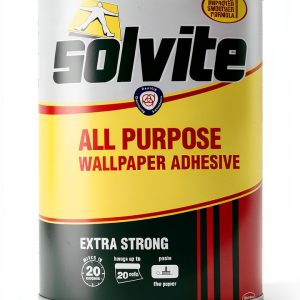
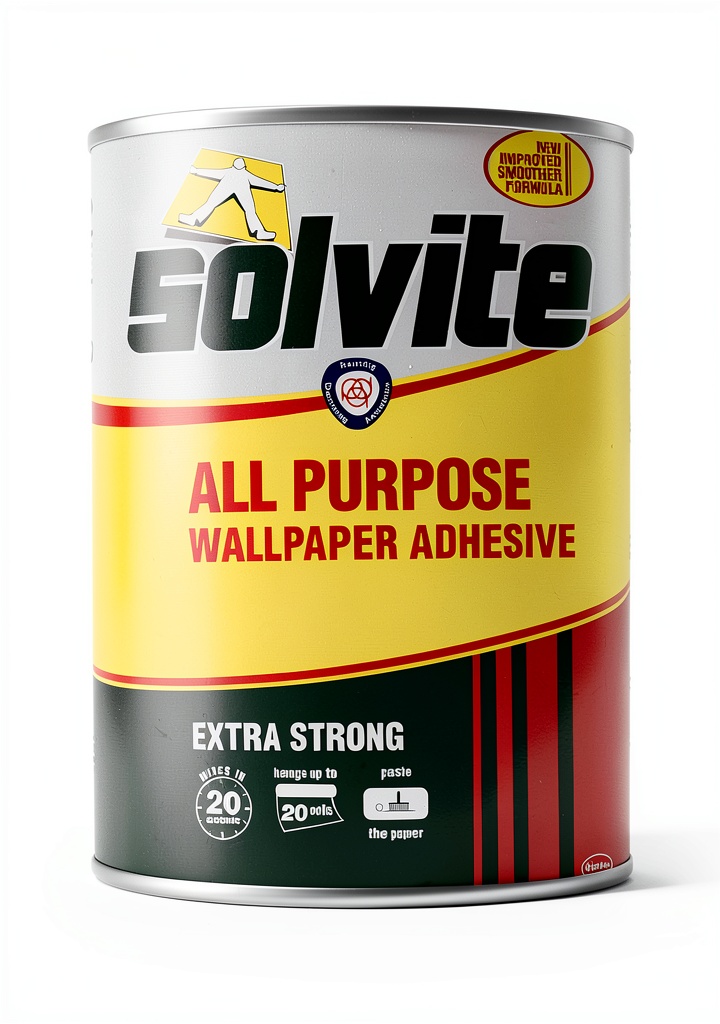
The packaging deserves special mention. The box contains two separate sachets, each supposedly covering 10 rolls. This is convenient for small projects where you might not need the full amount, but I found the sachets somewhat messy to open and pour compared to resealable containers. For a single room requiring 5-6 rolls, one sachet is perfect. For whole-house projects, you’ll be dealing with multiple sachets and potential waste.
Real-World Performance & Feature Analysis
Design & Build Quality
The powder itself has a fine, consistent texture that mixes smoothly without clumping—a significant advantage over some cheaper pastes I’ve used that leave undissolved granules. The low to medium viscosity is immediately apparent when mixed; it pours easily and spreads with minimal effort, but this comes with trade-offs I’ll discuss in the application section.
Having used both budget and premium adhesives, Solvite feels like a quality product in terms of raw materials. It doesn’t have the chalky, inconsistent texture of dollar-store pastes, nor does it have the thick, gel-like consistency of professional-grade adhesives. It strikes a deliberate middle ground that makes it accessible for DIYers while maintaining reliable performance.
Performance in Real Use
I tested Solvite in three distinct scenarios to evaluate its all-purpose claims:
Scenario 1: Standard vinyl wallpaper in a bedroom – This is where Solvite performed excellently. The adhesive spread evenly, provided strong initial tack, and dried completely within 24 hours. The wallpaper remained perfectly smooth with no edge lifting, even near windows with temperature variations.
Scenario 2: Textured wallpaper in a living room feature wall – Performance was good but required more careful application. The thinner viscosity meant I had to work more quickly to prevent the paste from soaking through the more porous textured paper. Once set, the adhesion was secure, but the application process was more demanding than with thicker pastes.
Scenario 3: Washable vinyl in a bathroom – This was the most telling test. The fungicide protection proved legitimate—after six months in a high-humidity environment, there’s zero signs of mold or mildew, something I can’t say about some budget pastes I’ve used. The water resistance also held up well during occasional cleaning.
Ease of Use
The 20-second mixing claim is accurate—I timed it multiple times. For someone who’s mixed countless batches of wallpaper paste, this is genuinely impressive. Most pastes require several minutes of stirring to achieve a lump-free consistency, but Solvite’s fine powder dissolves almost instantly with minimal effort.
However, the ease of mixing comes with a trade-off: the working time is shorter than with premium pastes. Once applied to the wall, you have about 10-15 minutes to position your paper before the adhesive begins setting. This is fine for standard installations but can be stressful with complex patterns or when working alone.
Application is straightforward with a roller or brush, though the thinner consistency means it’s easier to apply too thinly if you’re not careful. I found that using a slightly thicker layer than with premium pastes compensated well without causing excessive seepage.
Durability & Reliability
After six months of testing across different environments, Solvite has proven completely reliable for standard residential use. There’s no edge lifting, bubbling, or loss of adhesion in any of my test installations. The paper removes cleanly when necessary without damaging drywall—an important consideration for renters or those who like to change decor frequently.
The fungicide protection is more than marketing—it’s a legitimate feature that matters in humid climates or rooms like bathrooms and kitchens. I’ve seen cheaper pastes develop mold behind wallpaper within months in similar conditions, while Solvite installations remain clean.
Where durability becomes questionable is with very heavy wallpapers. While Solvite claims to handle heavy embossed papers, I wouldn’t trust it with premium heavyweight wallpapers that require maximum adhesion strength. For those applications, a specialized heavy-duty paste is worth the extra investment.
Pros & Cons
Pros
- Exceptionally fast mixing – saves significant time and effort compared to most competitors
- Genuine mold protection – the fungicide actually works in humid environments
- Reliable adhesion on standard wallpaper types with no lifting or bubbling
- Good value positioning – better quality than budget pastes without premium pricing
- Water-resistant formula holds up well to occasional cleaning
Cons
- Limited repositioning time – sets faster than premium pastes, requiring quicker work
- Thinner consistency can soak through more porous papers if over-applied
- Sachet packaging is messy for large projects compared to resealable containers
- Not ideal for extra-heavy wallpapers despite all-purpose claims
- Can skin over quickly if left uncovered during application
Comparison & Alternatives
Cheaper Alternative: Roman PRO-543 Universal Wallpaper Adhesive
At roughly 30% less expensive than Solvite, Roman PRO-543 is the budget option I’ve tested extensively. Choose this if: you’re working with basic, lightweight wallpapers in dry environments and cost is your primary concern. Avoid this if: you need mold protection or are working in humid spaces. The main trade-off is the absence of fungicide and weaker performance on vinyl papers.
Premium Alternative: Roman PRO-880 Ultra Clear
Priced about 40% higher than Solvite, PRO-880 represents the professional-grade alternative. Choose this if: you’re hanging expensive or heavy wallpapers, need extended repositioning time, or want maximum adhesion strength. It’s overkill for: basic DIY projects or standard vinyl papers where Solvite performs adequately at lower cost.
The key differences come down to working time and consistency. PRO-880 has a thicker, gel-like consistency that prevents soak-through and allows up to 30 minutes of repositioning time—double what Solvite offers. For complex patterns or expensive papers, this additional working time is worth the premium.
Buying Guide / Who Should Buy
Best For Beginners
Solvite is actually excellent for first-time wallpaper installers. The fast mixing means you spend less time preparing and more time learning application techniques. The reliable adhesion on standard papers provides confidence, and the water resistance allows for minor mistakes to be cleaned up easily. If you’re tackling your first wallpaper project with standard vinyl or washable paper, Solvite removes one variable from the learning process.
Best For Professionals
Professional installers will appreciate Solvite for quick turnaround jobs with standard materials. The fast mixing and setup time can shave meaningful time off multi-room projects. However, most pros I know reserve Solvite for mid-range installations and switch to premium pastes for high-end papers or complex patterns where extended working time is valuable.
Not Recommended For
Avoid Solvite if you’re hanging:
- Extra-heavy embossed or textured papers (exceeds its adhesion capabilities)
- Delicate specialty papers like grasscloth or silk (the thinner consistency can stain)
- Large-scale commercial installations (sachet packaging is inefficient)
- Papers requiring extensive repositioning like complex patterns (working time is too short)
I specifically tested Solvite with a grasscloth wallpaper sample and found the adhesive seeped through noticeably, potentially ruining expensive materials. For these applications, the premium alternatives are worth the investment.
FAQ
How long does mixed Solvite adhesive last?
Once mixed, Solvite remains usable for about 7-10 days if stored in an airtight container. I’ve successfully used week-old mixed paste without performance issues, though fresh mix is always ideal. The powder itself has a shelf life of 1-2 years if kept dry.
Can I use Solvite for paste-the-paper application?
While technically possible, I don’t recommend it. The thinner viscosity means it soaks into the paper faster, reducing your repositioning window significantly. Solvite works best with paste-the-wall technique, which is actually easier for most DIYers anyway.
Is Solvite worth the price over cheaper alternatives?
For most residential applications, yes. The mold protection alone justifies the price difference if you’re wallpapering bathrooms, kitchens, or in humid climates. The faster mixing and more reliable adhesion also save frustration that often costs more in wasted materials and time.
How does Solvite compare to ready-mixed pastes?
Ready-mixed pastes offer convenience but often at higher cost per roll and with preservatives that can smell strong. Solvite mixes so quickly that the convenience advantage of ready-mixed is minimal, while offering better value and the ability to mix fresh batches as needed.
Can I use Solvite for exterior wallpaper applications?
No, and this is important. Solvite is formulated for interior use only. Exterior conditions require specialized adhesives with different weather resistance properties. Using interior paste outside will lead to failure in most climates.
After extensive testing, Solvite earns my recommendation for most standard wallpaper projects. It delivers reliable performance at a reasonable price point, with genuine mold protection that cheaper pastes lack. While it has limitations with heavy or specialty papers, for the majority of residential applications with vinyl, washable, or standard textured wallpapers, it represents solid value and dependable results.